Liste de pistes

1CD : Bartók: Herzog Blaubarts Burg / Cantata profana
noTitreArtisteÉvaluationDurée
1Herzog Blaubarts Burg, Sz. 48, op. 11: »Wir sind am Ziele« (Blaubarth, Judith)
producteur :
Otto Gerdes (conductor and producer)
producteur délégué :
Prof. Elsa Schiller (Deutsche Grammophon's head of production 1952-1965)
voix de baryton [Blaubart] :
Dietrich Fischer‐Dieskau (German lyric baritone and conductor) (du 1958-10-07 au 1958-10-08)
voix de mezzo-soprano [Judith] :
Hertha Töpper (mezzo soprano) (du 1958-10-07 au 1958-10-08)
orchestre :
Radio‐Symphonie‐Orchester Berlin (aka RIAS‐Symphonie‐Orchester, 1946–1956 / Radio‐Symphonie‐Orchester Berlin, 1956–1993) (le 1958-10)
conductor :
Ferenc Fricsay (conductor) (du 1958-10-07 au 1958-10-08)
régisseur musical :
Werner Wolf (engineer/producer) (du 1958-10-07 au 1958-10-08)
droits phonographiques (℗) par :
Deutsche Grammophon GmbH (this is the company; for release labels, use “Deutsche Grammophon”) (le 1960)
enregistré à :
Jesus‐Christus‐Kirche (Dahlem) dans Berlin (du 1958-10-07 au 1958-10-08)
partiel recording of :
Herzog Blaubarts Burg (du 1958-10-07 au 1958-10-08)
compositeur :
Bartók Béla (Béla Bartók, composer) (le 1911)
librettiste :
Béla Balázs
version traduite de :
A kékszakállú herceg vára, Sz. 48, BB 62 (Bluebeard's Castle, Sz. 48, BB 62)
Béla Bartók4:32
2Herzog Blaubarts Burg, Sz. 48, op. 11: »Dies ist also Blaubarts Feste« (Judith, Blaubarth)
producteur :
Otto Gerdes (conductor and producer)
producteur délégué :
Prof. Elsa Schiller (Deutsche Grammophon's head of production 1952-1965)
voix de baryton [Blaubart] :
Dietrich Fischer‐Dieskau (German lyric baritone and conductor) (du 1958-10-07 au 1958-10-08)
voix de mezzo-soprano [Judith] :
Hertha Töpper (mezzo soprano) (du 1958-10-07 au 1958-10-08)
orchestre :
Radio‐Symphonie‐Orchester Berlin (aka RIAS‐Symphonie‐Orchester, 1946–1956 / Radio‐Symphonie‐Orchester Berlin, 1956–1993) (le 1958-10)
conductor :
Ferenc Fricsay (conductor) (du 1958-10-07 au 1958-10-08)
régisseur musical :
Werner Wolf (engineer/producer) (du 1958-10-07 au 1958-10-08)
droits phonographiques (℗) par :
Deutsche Grammophon GmbH (this is the company; for release labels, use “Deutsche Grammophon”) (le 1960)
enregistré à :
Jesus‐Christus‐Kirche (Dahlem) dans Berlin (du 1958-10-07 au 1958-10-08)
partiel recording of :
Herzog Blaubarts Burg (du 1958-10-07 au 1958-10-08)
compositeur :
Bartók Béla (Béla Bartók, composer) (le 1911)
librettiste :
Béla Balázs
version traduite de :
A kékszakállú herceg vára, Sz. 48, BB 62 (Bluebeard's Castle, Sz. 48, BB 62)
Béla Bartók6:17
3Herzog Blaubarts Burg, Sz. 48, op. 11: »Große schweigende Türen« (Judith, Blaubarth)
producteur :
Otto Gerdes (conductor and producer)
producteur délégué :
Prof. Elsa Schiller (Deutsche Grammophon's head of production 1952-1965)
voix de baryton [Blaubart] :
Dietrich Fischer‐Dieskau (German lyric baritone and conductor) (du 1958-10-07 au 1958-10-08)
voix de mezzo-soprano [Judith] :
Hertha Töpper (mezzo soprano) (du 1958-10-07 au 1958-10-08)
orchestre :
Radio‐Symphonie‐Orchester Berlin (aka RIAS‐Symphonie‐Orchester, 1946–1956 / Radio‐Symphonie‐Orchester Berlin, 1956–1993) (le 1958-10)
conductor :
Ferenc Fricsay (conductor) (du 1958-10-07 au 1958-10-08)
régisseur musical :
Werner Wolf (engineer/producer) (du 1958-10-07 au 1958-10-08)
droits phonographiques (℗) par :
Deutsche Grammophon GmbH (this is the company; for release labels, use “Deutsche Grammophon”) (le 1960)
enregistré à :
Jesus‐Christus‐Kirche (Dahlem) dans Berlin (du 1958-10-07 au 1958-10-08)
partiel recording of :
Herzog Blaubarts Burg (du 1958-10-07 au 1958-10-08)
compositeur :
Bartók Béla (Béla Bartók, composer) (le 1911)
librettiste :
Béla Balázs
version traduite de :
A kékszakállú herceg vára, Sz. 48, BB 62 (Bluebeard's Castle, Sz. 48, BB 62)
Béla Bartók4:32
4Herzog Blaubarts Burg, Sz. 48, op. 11: »Weh - was siehst Du?« (Judith, Blaubarth)
producteur :
Otto Gerdes (conductor and producer)
producteur délégué :
Prof. Elsa Schiller (Deutsche Grammophon's head of production 1952-1965)
voix de baryton [Blaubart] :
Dietrich Fischer‐Dieskau (German lyric baritone and conductor) (du 1958-10-07 au 1958-10-08)
voix de mezzo-soprano [Judith] :
Hertha Töpper (mezzo soprano) (du 1958-10-07 au 1958-10-08)
orchestre :
Radio‐Symphonie‐Orchester Berlin (aka RIAS‐Symphonie‐Orchester, 1946–1956 / Radio‐Symphonie‐Orchester Berlin, 1956–1993) (le 1958-10)
conductor :
Ferenc Fricsay (conductor) (du 1958-10-07 au 1958-10-08)
régisseur musical :
Werner Wolf (engineer/producer) (du 1958-10-07 au 1958-10-08)
droits phonographiques (℗) par :
Deutsche Grammophon GmbH (this is the company; for release labels, use “Deutsche Grammophon”) (le 1960)
enregistré à :
Jesus‐Christus‐Kirche (Dahlem) dans Berlin (du 1958-10-07 au 1958-10-08)
partiel recording of :
Herzog Blaubarts Burg (du 1958-10-07 au 1958-10-08)
compositeur :
Bartók Béla (Béla Bartók, composer) (le 1911)
librettiste :
Béla Balázs
version traduite de :
A kékszakállú herceg vára, Sz. 48, BB 62 (Bluebeard's Castle, Sz. 48, BB 62)
Béla Bartók3:30
5Herzog Blaubarts Burg, Sz. 48, op. 11: »Was siehst« - »Tausend scharfe Waffen« (Blaubarth, Judith)
producteur :
Otto Gerdes (conductor and producer)
producteur délégué :
Prof. Elsa Schiller (Deutsche Grammophon's head of production 1952-1965)
voix de baryton [Blaubart] :
Dietrich Fischer‐Dieskau (German lyric baritone and conductor) (du 1958-10-07 au 1958-10-08)
voix de mezzo-soprano [Judith] :
Hertha Töpper (mezzo soprano) (du 1958-10-07 au 1958-10-08)
orchestre :
Radio‐Symphonie‐Orchester Berlin (aka RIAS‐Symphonie‐Orchester, 1946–1956 / Radio‐Symphonie‐Orchester Berlin, 1956–1993) (le 1958-10)
conductor :
Ferenc Fricsay (conductor) (du 1958-10-07 au 1958-10-08)
régisseur musical :
Werner Wolf (engineer/producer) (du 1958-10-07 au 1958-10-08)
droits phonographiques (℗) par :
Deutsche Grammophon GmbH (this is the company; for release labels, use “Deutsche Grammophon”) (le 1960)
enregistré à :
Jesus‐Christus‐Kirche (Dahlem) dans Berlin (du 1958-10-07 au 1958-10-08)
partiel recording of :
Herzog Blaubarts Burg (du 1958-10-07 au 1958-10-08)
compositeur :
Bartók Béla (Béla Bartók, composer) (le 1911)
librettiste :
Béla Balázs
version traduite de :
A kékszakállú herceg vára, Sz. 48, BB 62 (Bluebeard's Castle, Sz. 48, BB 62)
Béla Bartók2:53
6Herzog Blaubarts Burg, Sz. 48, op. 11: »Sieh nur den Schatz« (Judith, Blaubarth)
producteur :
Otto Gerdes (conductor and producer)
producteur délégué :
Prof. Elsa Schiller (Deutsche Grammophon's head of production 1952-1965)
voix de baryton [Blaubart] :
Dietrich Fischer‐Dieskau (German lyric baritone and conductor) (du 1958-10-07 au 1958-10-08)
voix de mezzo-soprano [Judith] :
Hertha Töpper (mezzo soprano) (du 1958-10-07 au 1958-10-08)
orchestre :
Radio‐Symphonie‐Orchester Berlin (aka RIAS‐Symphonie‐Orchester, 1946–1956 / Radio‐Symphonie‐Orchester Berlin, 1956–1993) (le 1958-10)
conductor :
Ferenc Fricsay (conductor) (du 1958-10-07 au 1958-10-08)
régisseur musical :
Werner Wolf (engineer/producer) (du 1958-10-07 au 1958-10-08)
droits phonographiques (℗) par :
Deutsche Grammophon GmbH (this is the company; for release labels, use “Deutsche Grammophon”) (le 1960)
enregistré à :
Jesus‐Christus‐Kirche (Dahlem) dans Berlin (du 1958-10-07 au 1958-10-08)
partiel recording of :
Herzog Blaubarts Burg (du 1958-10-07 au 1958-10-08)
compositeur :
Bartók Béla (Béla Bartók, composer) (le 1911)
librettiste :
Béla Balázs
version traduite de :
A kékszakállú herceg vára, Sz. 48, BB 62 (Bluebeard's Castle, Sz. 48, BB 62)
Béla Bartók1:39
7Herzog Blaubarts Burg, Sz. 48, op. 11: »Ach! Blumenpracht« (Judith, Blaubarth)
producteur :
Otto Gerdes (conductor and producer)
producteur délégué :
Prof. Elsa Schiller (Deutsche Grammophon's head of production 1952-1965)
voix de baryton [Blaubart] :
Dietrich Fischer‐Dieskau (German lyric baritone and conductor) (du 1958-10-07 au 1958-10-08)
voix de mezzo-soprano [Judith] :
Hertha Töpper (mezzo soprano) (du 1958-10-07 au 1958-10-08)
orchestre :
Radio‐Symphonie‐Orchester Berlin (aka RIAS‐Symphonie‐Orchester, 1946–1956 / Radio‐Symphonie‐Orchester Berlin, 1956–1993) (le 1958-10)
conductor :
Ferenc Fricsay (conductor) (du 1958-10-07 au 1958-10-08)
régisseur musical :
Werner Wolf (engineer/producer) (du 1958-10-07 au 1958-10-08)
droits phonographiques (℗) par :
Deutsche Grammophon GmbH (this is the company; for release labels, use “Deutsche Grammophon”) (le 1960)
enregistré à :
Jesus‐Christus‐Kirche (Dahlem) dans Berlin (du 1958-10-07 au 1958-10-08)
partiel recording of :
Herzog Blaubarts Burg (du 1958-10-07 au 1958-10-08)
compositeur :
Bartók Béla (Béla Bartók, composer) (le 1911)
librettiste :
Béla Balázs
version traduite de :
A kékszakállú herceg vára, Sz. 48, BB 62 (Bluebeard's Castle, Sz. 48, BB 62)
Béla Bartók4:17
8Herzog Blaubarts Burg, Sz. 48, op. 11: »Ah! - Sieh, soweit die Blicke reichen« (Judith, Blaubarth)
producteur :
Otto Gerdes (conductor and producer)
producteur délégué :
Prof. Elsa Schiller (Deutsche Grammophon's head of production 1952-1965)
voix de baryton [Blaubart] :
Dietrich Fischer‐Dieskau (German lyric baritone and conductor) (du 1958-10-07 au 1958-10-08)
voix de mezzo-soprano [Judith] :
Hertha Töpper (mezzo soprano) (du 1958-10-07 au 1958-10-08)
orchestre :
Radio‐Symphonie‐Orchester Berlin (aka RIAS‐Symphonie‐Orchester, 1946–1956 / Radio‐Symphonie‐Orchester Berlin, 1956–1993) (le 1958-10)
conductor :
Ferenc Fricsay (conductor) (du 1958-10-07 au 1958-10-08)
régisseur musical :
Werner Wolf (engineer/producer) (du 1958-10-07 au 1958-10-08)
droits phonographiques (℗) par :
Deutsche Grammophon GmbH (this is the company; for release labels, use “Deutsche Grammophon”) (le 1960)
enregistré à :
Jesus‐Christus‐Kirche (Dahlem) dans Berlin (du 1958-10-07 au 1958-10-08)
partiel recording of :
Herzog Blaubarts Burg (du 1958-10-07 au 1958-10-08)
compositeur :
Bartók Béla (Béla Bartók, composer) (le 1911)
librettiste :
Béla Balázs
version traduite de :
A kékszakállú herceg vára, Sz. 48, BB 62 (Bluebeard's Castle, Sz. 48, BB 62)
Béla Bartók6:19
9Herzog Blaubarts Burg, Sz. 48, op. 11: »Weißes stilles Wasser seh ich« (Judith, Blaubarth)
producteur :
Otto Gerdes (conductor and producer)
producteur délégué :
Prof. Elsa Schiller (Deutsche Grammophon's head of production 1952-1965)
voix de baryton [Blaubart] :
Dietrich Fischer‐Dieskau (German lyric baritone and conductor) (du 1958-10-07 au 1958-10-08)
voix de mezzo-soprano [Judith] :
Hertha Töpper (mezzo soprano) (du 1958-10-07 au 1958-10-08)
orchestre :
Radio‐Symphonie‐Orchester Berlin (aka RIAS‐Symphonie‐Orchester, 1946–1956 / Radio‐Symphonie‐Orchester Berlin, 1956–1993) (le 1958-10)
conductor :
Ferenc Fricsay (conductor) (du 1958-10-07 au 1958-10-08)
régisseur musical :
Werner Wolf (engineer/producer) (du 1958-10-07 au 1958-10-08)
droits phonographiques (℗) par :
Deutsche Grammophon GmbH (this is the company; for release labels, use “Deutsche Grammophon”) (le 1960)
enregistré à :
Jesus‐Christus‐Kirche (Dahlem) dans Berlin (du 1958-10-07 au 1958-10-08)
partiel recording of :
Herzog Blaubarts Burg (du 1958-10-07 au 1958-10-08)
compositeur :
Bartók Béla (Béla Bartók, composer) (le 1911)
librettiste :
Béla Balázs
version traduite de :
A kékszakállú herceg vára, Sz. 48, BB 62 (Bluebeard's Castle, Sz. 48, BB 62)
Béla Bartók11:19
10Herzog Blaubarts Burg, Sz. 48, op. 11: »Schau, die früher'n Frauen all« (Blaubarth, Judith)
producteur :
Otto Gerdes (conductor and producer)
producteur délégué :
Prof. Elsa Schiller (Deutsche Grammophon's head of production 1952-1965)
voix de baryton [Blaubart] :
Dietrich Fischer‐Dieskau (German lyric baritone and conductor) (du 1958-10-07 au 1958-10-08)
voix de mezzo-soprano [Judith] :
Hertha Töpper (mezzo soprano) (du 1958-10-07 au 1958-10-08)
orchestre :
Radio‐Symphonie‐Orchester Berlin (aka RIAS‐Symphonie‐Orchester, 1946–1956 / Radio‐Symphonie‐Orchester Berlin, 1956–1993) (le 1958-10)
conductor :
Ferenc Fricsay (conductor) (du 1958-10-07 au 1958-10-08)
régisseur musical :
Werner Wolf (engineer/producer) (du 1958-10-07 au 1958-10-08)
droits phonographiques (℗) par :
Deutsche Grammophon GmbH (this is the company; for release labels, use “Deutsche Grammophon”) (le 1960)
enregistré à :
Jesus‐Christus‐Kirche (Dahlem) dans Berlin (du 1958-10-07 au 1958-10-08)
partiel recording of :
Herzog Blaubarts Burg (du 1958-10-07 au 1958-10-08)
compositeur :
Bartók Béla (Béla Bartók, composer) (le 1911)
librettiste :
Béla Balázs
version traduite de :
A kékszakállú herceg vára, Sz. 48, BB 62 (Bluebeard's Castle, Sz. 48, BB 62)
Béla Bartók2:38
11Herzog Blaubarts Burg, Sz. 48, op. 11: »Früh am Morgen kam die erste« (Blaubarth, Judith)
producteur :
Otto Gerdes (conductor and producer)
producteur délégué :
Prof. Elsa Schiller (Deutsche Grammophon's head of production 1952-1965)
voix de baryton [Blaubart] :
Dietrich Fischer‐Dieskau (German lyric baritone and conductor) (du 1958-10-07 au 1958-10-08)
voix de mezzo-soprano [Judith] :
Hertha Töpper (mezzo soprano) (du 1958-10-07 au 1958-10-08)
orchestre :
Radio‐Symphonie‐Orchester Berlin (aka RIAS‐Symphonie‐Orchester, 1946–1956 / Radio‐Symphonie‐Orchester Berlin, 1956–1993) (le 1958-10)
conductor :
Ferenc Fricsay (conductor) (du 1958-10-07 au 1958-10-08)
régisseur musical :
Werner Wolf (engineer/producer) (du 1958-10-07 au 1958-10-08)
droits phonographiques (℗) par :
Deutsche Grammophon GmbH (this is the company; for release labels, use “Deutsche Grammophon”) (le 1960)
enregistré à :
Jesus‐Christus‐Kirche (Dahlem) dans Berlin (du 1958-10-07 au 1958-10-08)
partiel recording of :
Herzog Blaubarts Burg (du 1958-10-07 au 1958-10-08)
compositeur :
Bartók Béla (Béla Bartók, composer) (le 1911)
librettiste :
Béla Balázs
version traduite de :
A kékszakállú herceg vára, Sz. 48, BB 62 (Bluebeard's Castle, Sz. 48, BB 62)
Béla Bartók6:44
12Cantata Profana, Sz. 94: »Wunder hört ihr sagen«. Molto moderato - Allegro molto
producteur :
Wolfgang Lohse
producteur délégué :
Prof. Elsa Schiller (Deutsche Grammophon's head of production 1952-1965)
chœurs :
Chor der St. Hedwigs‐Kathedrale (le 1951-09-12) et RIAS‐Kammerchor (German chamber choir) (le 1951-09-12)
orchestre :
RIAS‐Symphonie‐Orchester Berlin (aka RIAS‐Symphonie‐Orchester, 1946–1956 / Radio‐Symphonie‐Orchester Berlin, 1956–1993) (le 1951-09-12)
conductor :
Ferenc Fricsay (conductor) (le 1951-09-12)
droits phonographiques (℗) par :
Deutsche Grammophon GmbH (this is the company; for release labels, use “Deutsche Grammophon”) (le 1994)
enregistré à :
Jesus‐Christus‐Kirche (Dahlem) dans Berlin (le 1951-09-12)
recording of :
Cantata profana, Sz. 94: I. „Wunder hört ihr sagen“ Molto moderato – Molto allegro (Chor) (le 1951-09-12)
partie de :
Cantata Profana, Sz. 94 (German version)
Béla Bartók7:26
13Cantata Profana, Sz. 94: »Lange harrt der Alte«. Andante
producteur :
Wolfgang Lohse
producteur délégué :
Prof. Elsa Schiller (Deutsche Grammophon's head of production 1952-1965)
chœurs :
Chor der St. Hedwigs‐Kathedrale (le 1951-09-12) et RIAS‐Kammerchor (German chamber choir) (le 1951-09-12)
voix de baryton :
Dietrich Fischer‐Dieskau (German lyric baritone and conductor) (le 1951-09-12)
voix de ténor :
Helmut Krebs (tenor) (le 1951-09-12)
orchestre :
RIAS‐Symphonie‐Orchester Berlin (aka RIAS‐Symphonie‐Orchester, 1946–1956 / Radio‐Symphonie‐Orchester Berlin, 1956–1993) (le 1951-09-12)
conductor :
Ferenc Fricsay (conductor) (le 1951-09-12)
droits phonographiques (℗) par :
Deutsche Grammophon GmbH (this is the company; for release labels, use “Deutsche Grammophon”) (le 1994)
enregistré à :
Jesus‐Christus‐Kirche (Dahlem) dans Berlin (le 1951-09-12)
recording of :
Cantata profana, Sz. 94: II. „Lange harrt der Alte“ Andante (Chor, Tenor, Bariton) (le 1951-09-12)
partie de :
Cantata Profana, Sz. 94 (German version)
Béla Bartók8:13
14Cantata Profana, Sz. 94: »Wunder ward euch kund heut«. Moderato
producteur :
Wolfgang Lohse
producteur délégué :
Prof. Elsa Schiller (Deutsche Grammophon's head of production 1952-1965)
chœurs :
Chor der St. Hedwigs‐Kathedrale (le 1951-09-12) et RIAS‐Kammerchor (German chamber choir) (le 1951-09-12)
voix de ténor :
Helmut Krebs (tenor) (le 1951-09-12)
orchestre :
RIAS‐Symphonie‐Orchester Berlin (aka RIAS‐Symphonie‐Orchester, 1946–1956 / Radio‐Symphonie‐Orchester Berlin, 1956–1993) (le 1951-09-12)
conductor :
Ferenc Fricsay (conductor) (le 1951-09-12)
droits phonographiques (℗) par :
Deutsche Grammophon GmbH (this is the company; for release labels, use “Deutsche Grammophon”) (le 1994)
enregistré à :
Jesus‐Christus‐Kirche (Dahlem) dans Berlin (le 1951-09-12)
recording of :
Cantata profana, Sz. 94: III. „Wunder ward euch kund heut’“ Moderato (Chor, Tenor) (le 1951-09-12)
partie de :
Cantata Profana, Sz. 94 (German version)
Béla Bartók3:03
2CD : Beethoven: Fidelio(1)
3CD : Beethoven: Fidelio(2)
4CD : Bizet: Carmen
5CD : Gluck: Orpheus und Eurydike(1)
6CD : Gluck: Orpheus und Eurydike(2)
7CD : Haydn: The Seasons(1)
8CD : Haydn: The Seasons(2)
9CD : Haydn: The Seasons(3)
10CD : Haydn: The Seasons(4) / Haydn: Te Deum
11CD : Kodály: Psalmus Hungaricus
12CD : Mendelssohn: A Midsummer Night's Dream
13CD : Mozart: Great Mass in C minor / Laudate omnes gentes / Exsultate, jubilate
14CD : Mozart: Requiem
15CD : Mozart: Die Entführung aus dem Serail(1)
16CD : Mozart: Die Entführung aus dem Serail(2) / Exsultate, jubilate / Arias
17CD : Mozart: The Magic Flute(1)
18CD : Mozart: The Magic Flute(2)
19CD : Mozart: Don Giovanni(1)
20CD : Mozart: Don Giovanni(2)
21CD : Mozart: Don Giovanni(3)
22CD : Mozart: Idomeneo(1)
23CD : Mozart: Idomeneo(2)
24CD : Mozart: Le nozze di Figaro(1)
25CD : Mozart: Le nozze di Figaro(2)
26CD : Mozart: Le nozze di Figaro(3)
27CD : Rossini: Stabat Mater
28CD : J. Strauss II: Die Fledermaus(1)
29CD : J. Strauss II: Die Fledermaus(2) / Voices of Spring
30CD : Igor Stravinsky: Oedipus Rex / Symphony of Psalms
31CD : Verdi: Requiem(1)
32CD : Verdi: Requiem(2)
33CD : Verdi: Requiem(3) / Quattro pezzi sacri
34CD : Wagner: Der fliegende Holländer(1)
35CD : Wagner: Der fliegende Holländer(2)
36CD : Bizet, Gounod, Verdi...:Opera Arias / Orff: Carmina Burana(excerpts)
37CD : Interviews with Ferenc Fricsay
38DVD-Vidéo : Dukas: The Sorcerer's Apprentice / Kodály: Háry János Suite

Crédits

Parution

fabriqué à :EU (Europe)
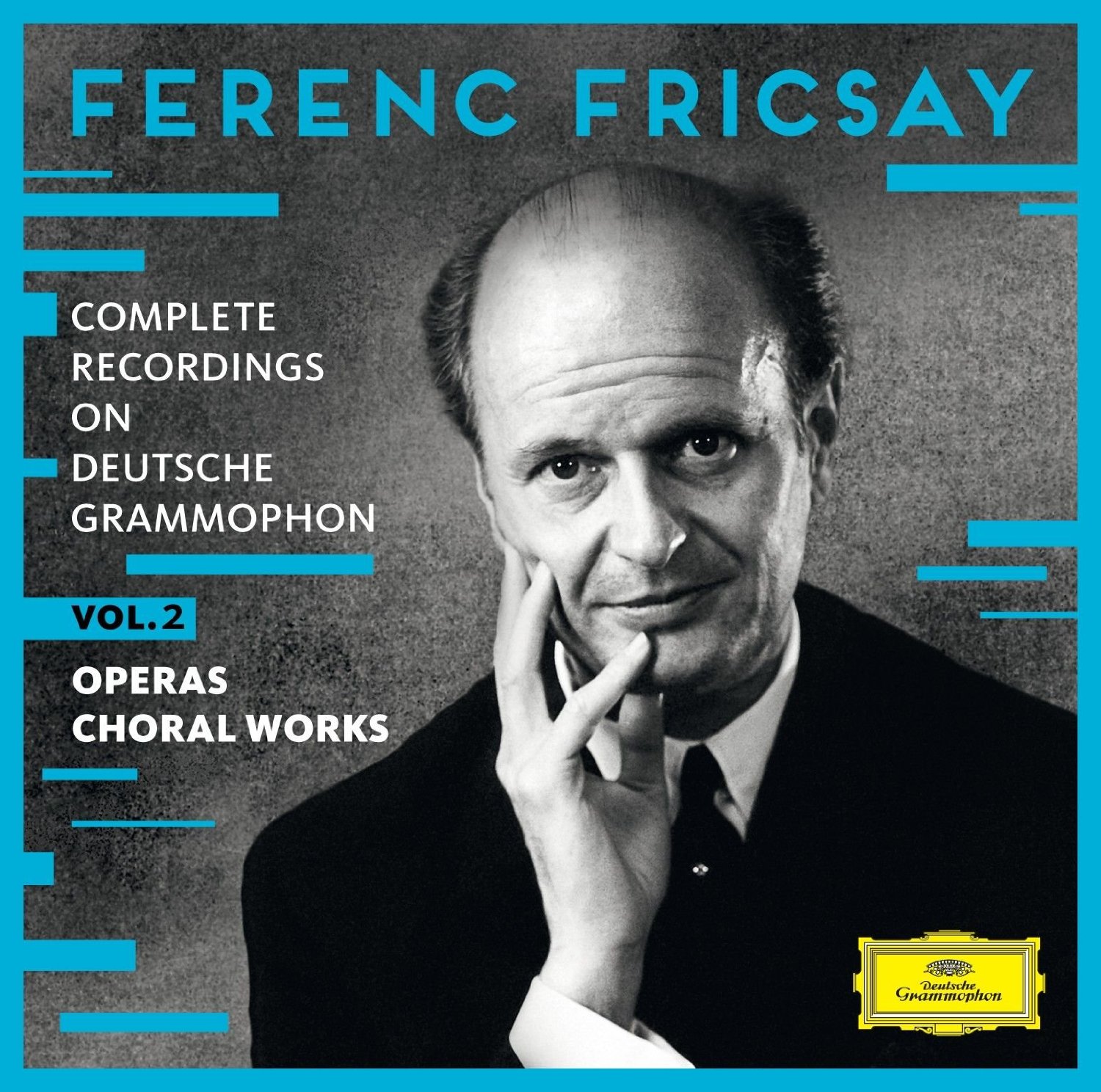
photographie :Erich Auerbach (photographer) (tâche : box photo left side © Erich Auerbach)
Hugo Jehle (photographer) (tâche : box photo right side © Hugo Jehle)
Legrand (photo studio) (tâche : box cover photo © Legrand)
droits phonographiques (℗) par :Deutsche Grammophon GmbH (this is the company; for release labels, use “Deutsche Grammophon”) (le 2015)
Discogs :https://www.discogs.com/release/11744322 [info]
ASIN :UK: B00W6ET93W [info]
entrée discographique :http://www.deutschegrammophon.com/en/cat/4794641 [info]